
Linksii
Designing the brand for a category that didn't exist yet.
Overview
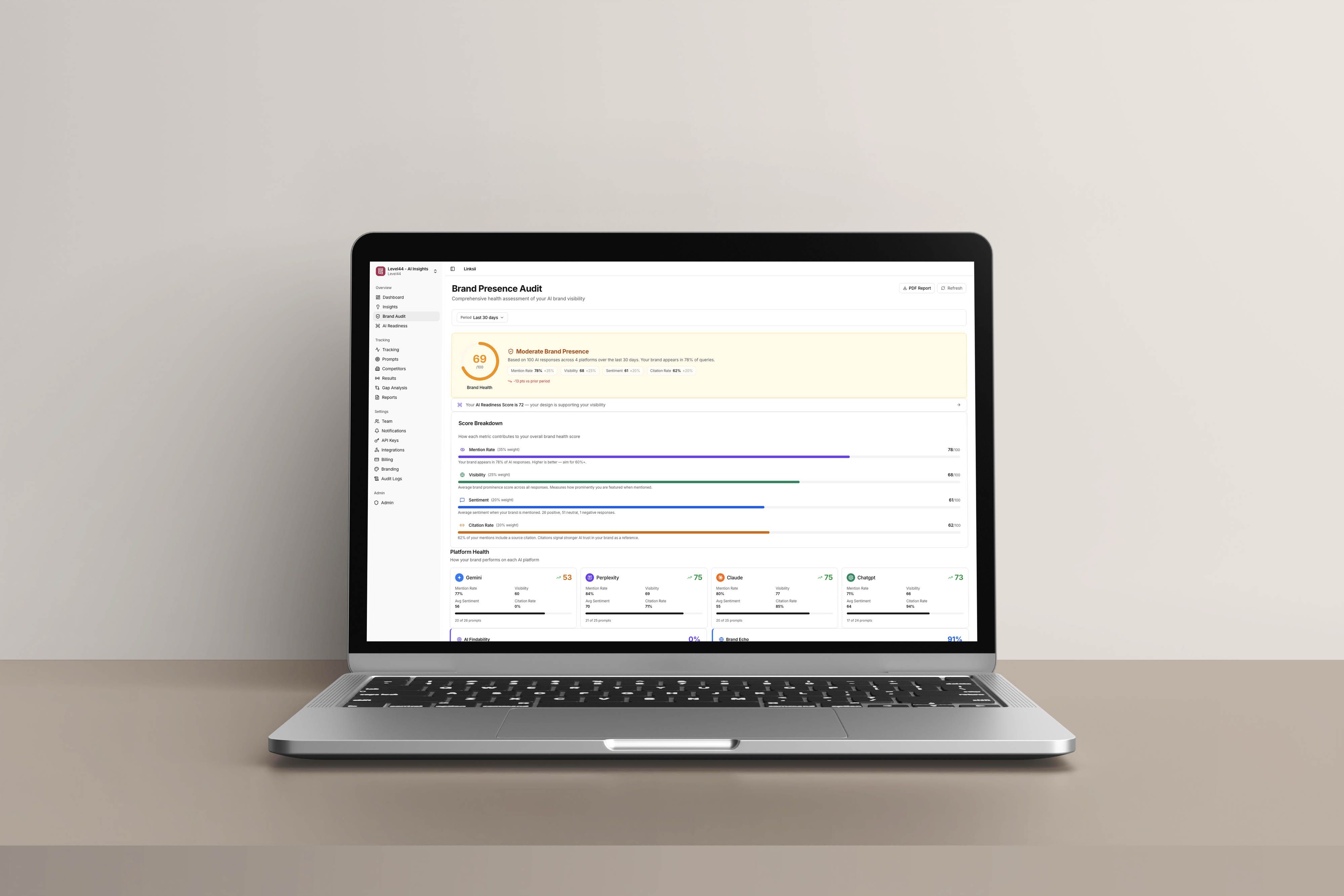
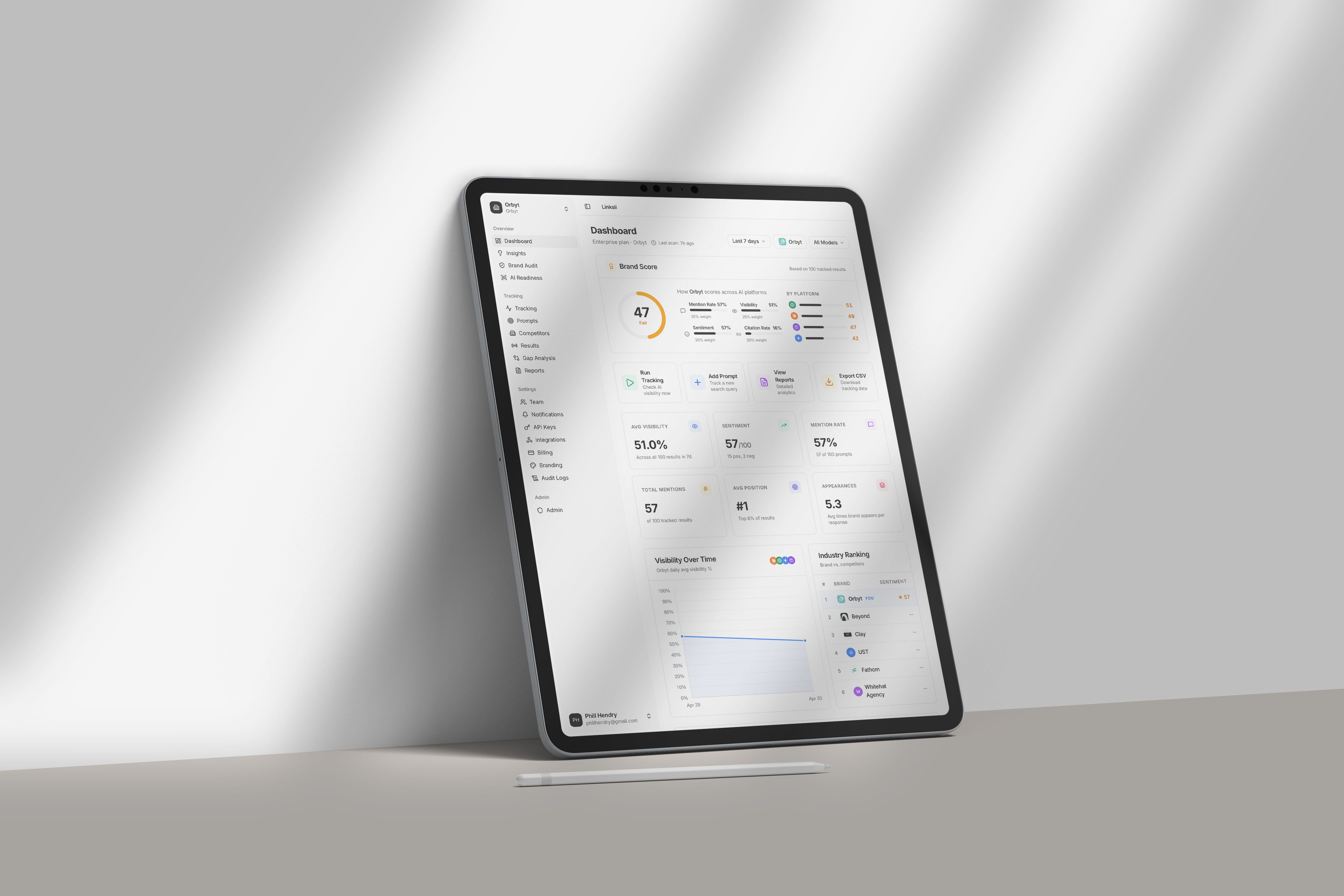
Linksii is an AI search analytics platform. It tracks how brands appear across ChatGPT, Claude, Gemini and Perplexity. When they're mentioned, how they're described, and where they rank against competitors. The studio designed the brand, the website, the positioning and the research artefacts, including the State of AI Search Visibility 2026 report.
The challenge wasn't designing a SaaS product brand. It was designing for a category most buyers didn't know existed yet.
The challenge
What made the work worth doing.
Most SaaS branding has a known shape. Buyers understand the category. They've seen a CRM before. They've used analytics dashboards. The brand's job is to differentiate within an established frame, signal trust, and explain what makes this product the right choice in a category buyers already understand.
Linksii didn't have any of that.
When the platform launched, "AI search visibility" wasn't a recognised category. Marketing teams weren't allocating budget for it. CMOs weren't measuring it. The closest reference points were SEO tools, brand monitoring platforms, and a small cluster of newer entrants (Profound, AthenaHQ, Peec.ai, Brandlight), all racing to define the same space.
That created an unusual brand problem. Linksii couldn't position itself against established competitors because there weren't any. It couldn't lean on category conventions because the conventions didn't exist. And it couldn't sell itself as "the X of Y" because both X and Y were still being negotiated.
The brief, in plain terms: build a brand that helps a buyer understand the problem in the first thirty seconds, makes the case for why it matters now, and earns enough credibility to convert a free trial. All while teaching the category as it goes.
The approach
How the work got done.
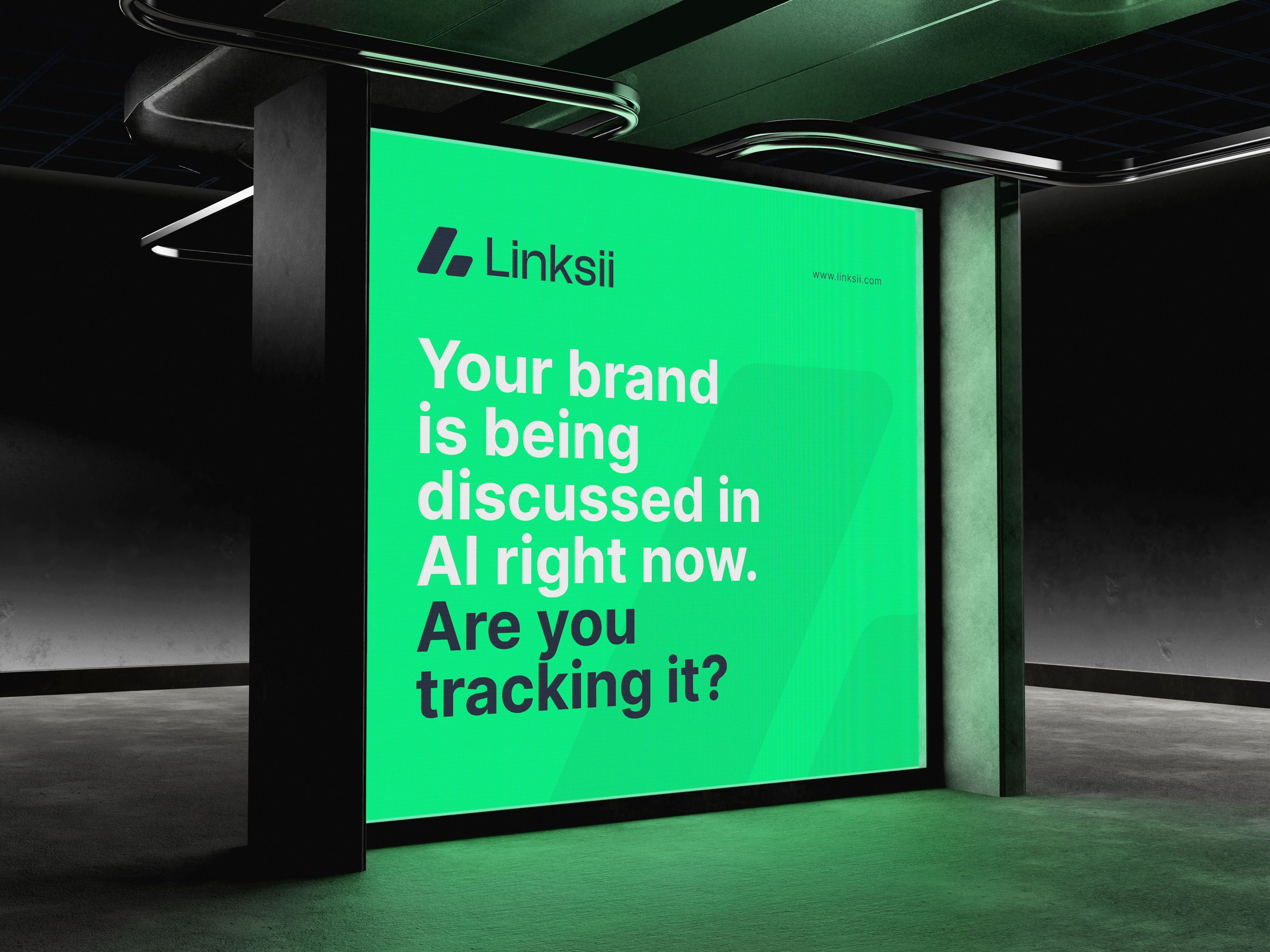
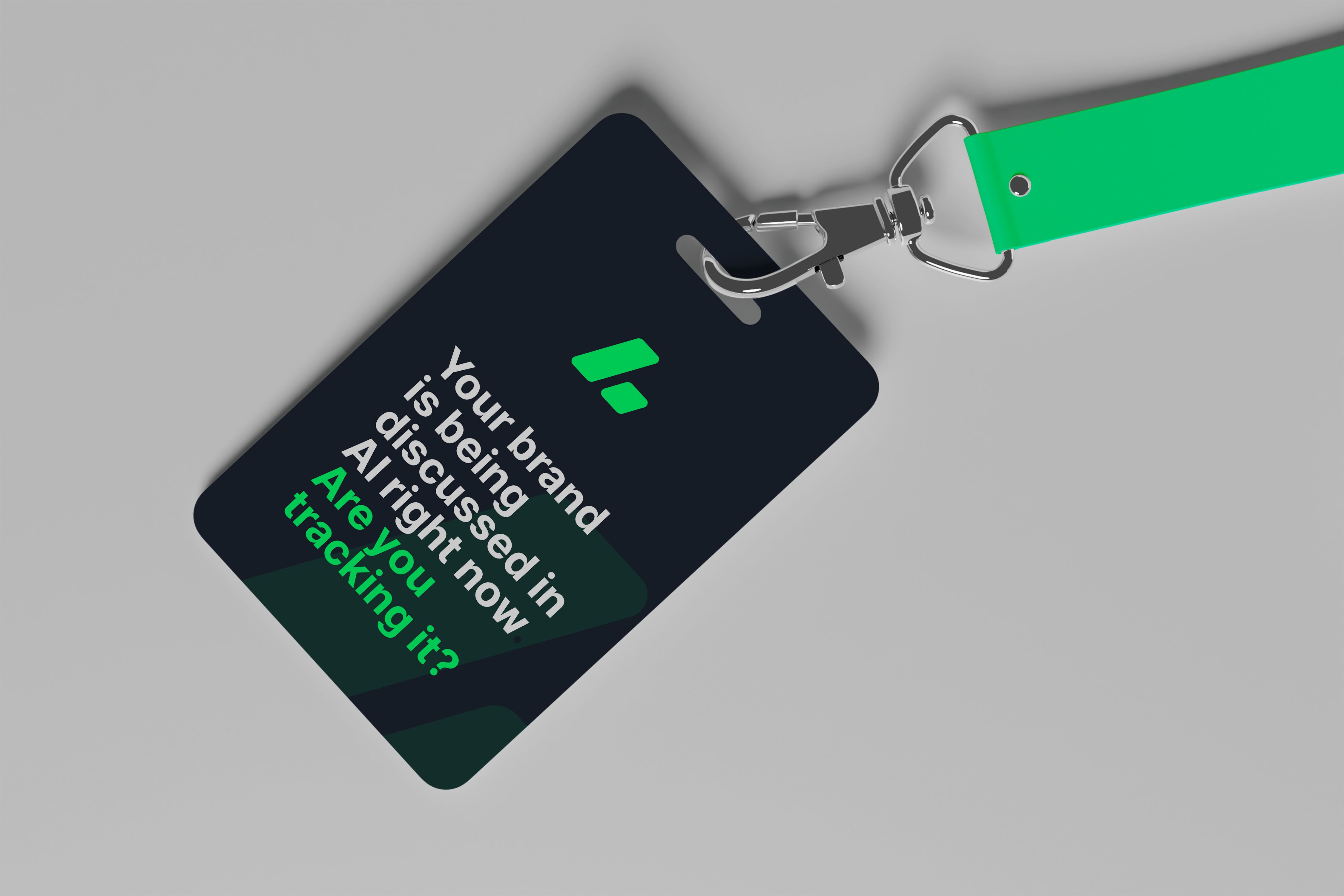
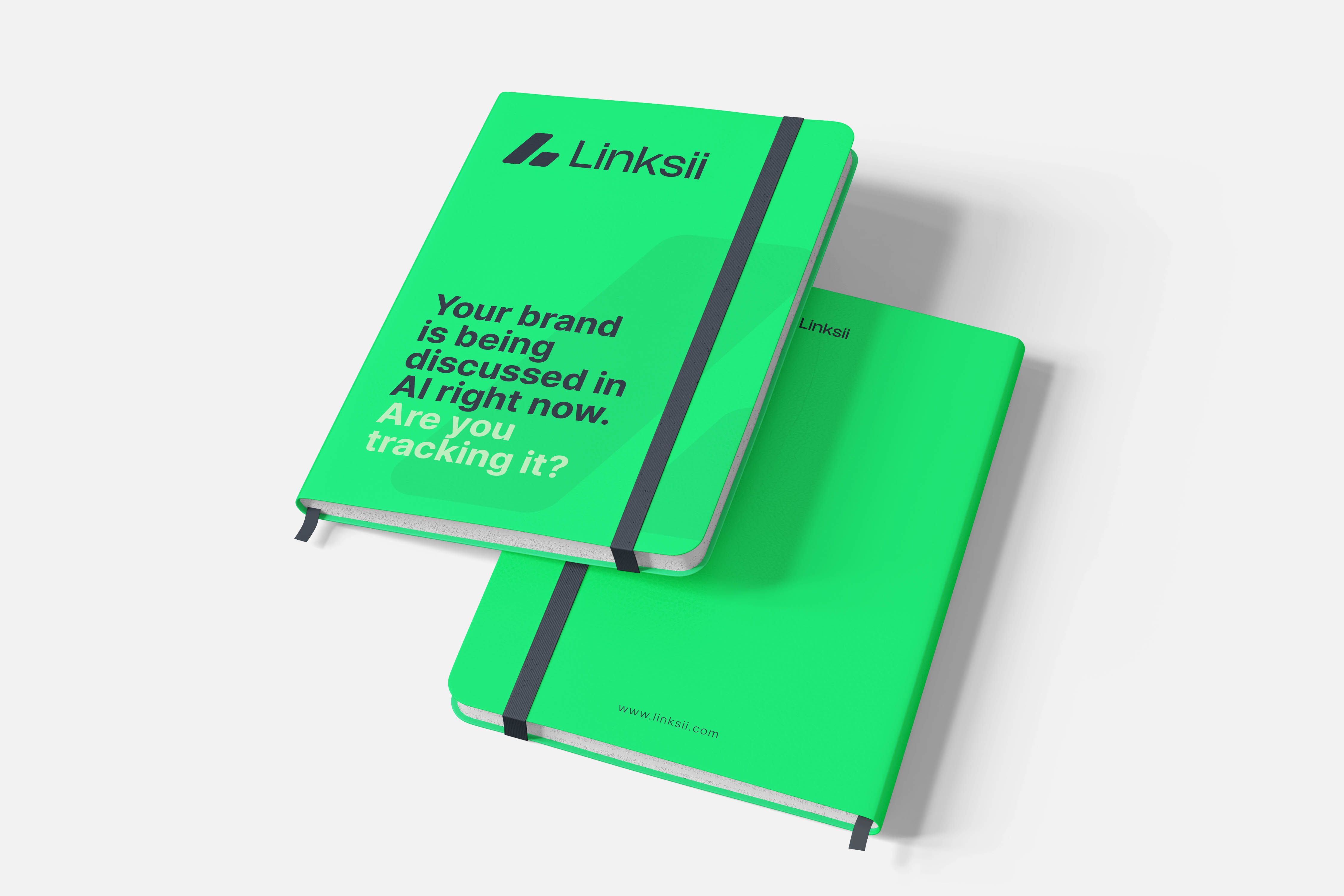
The brand had to lead with clarity, not personality. A category-creating SaaS product can't afford to be quirky. Buyers needed to feel like they were looking at infrastructure, not a startup pitch deck. The identity leaned into a confident, technical register. A sharp wordmark, restrained colour system anchored on a single distinctive green, typography that read as analytical rather than decorative. The brand looks like something serious because the buyer has to take it seriously before they'll take the category seriously.
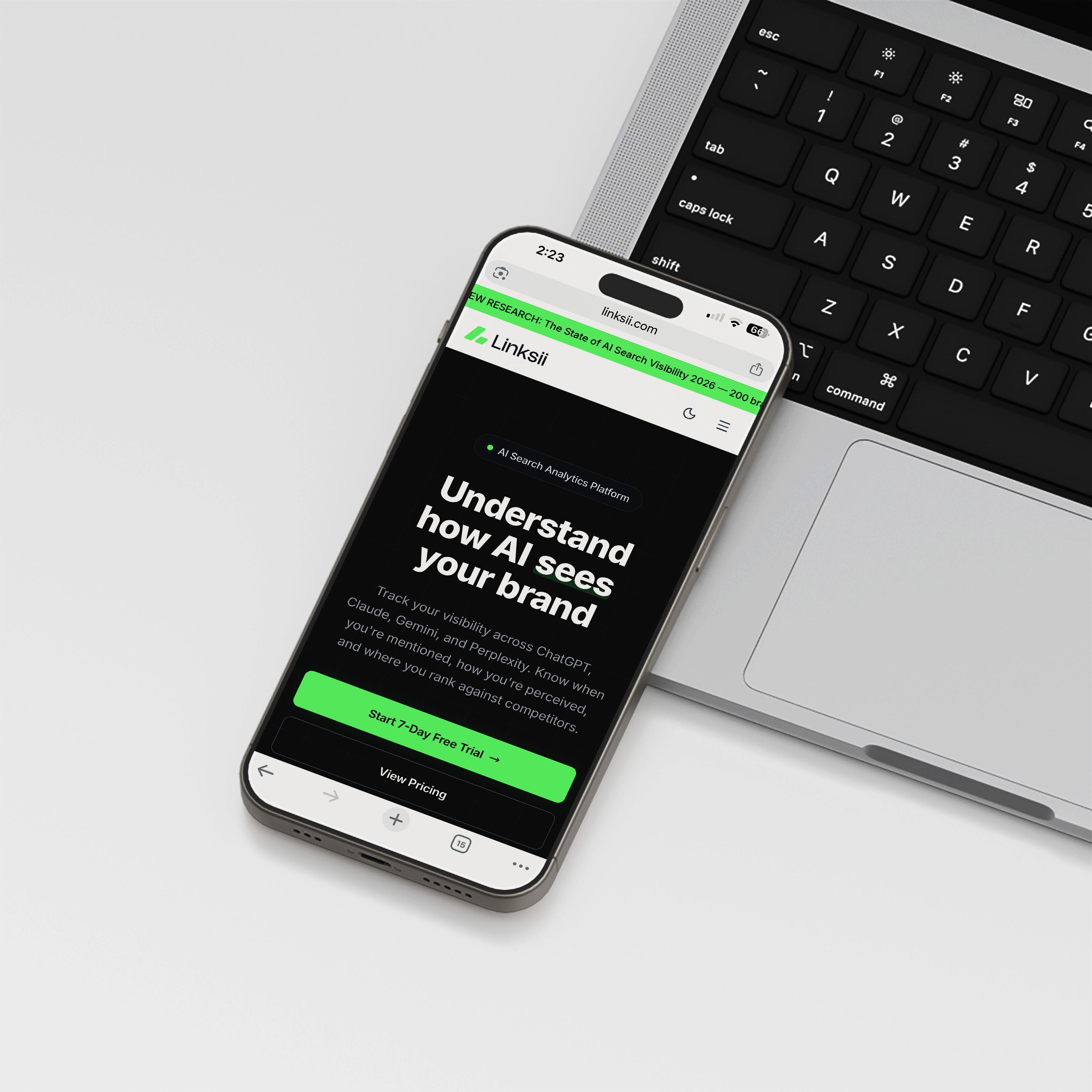
The website had to argue the case before it sold the product. Most SaaS sites lead with features. Linksii couldn't, because features mean nothing until the buyer agrees the underlying problem is real. The homepage was structured as an argument. AI is becoming the front door. Your brand is probably invisible in those answers. Here's how the platform measures it, and here's what to do about it. Features come last. The argument comes first.
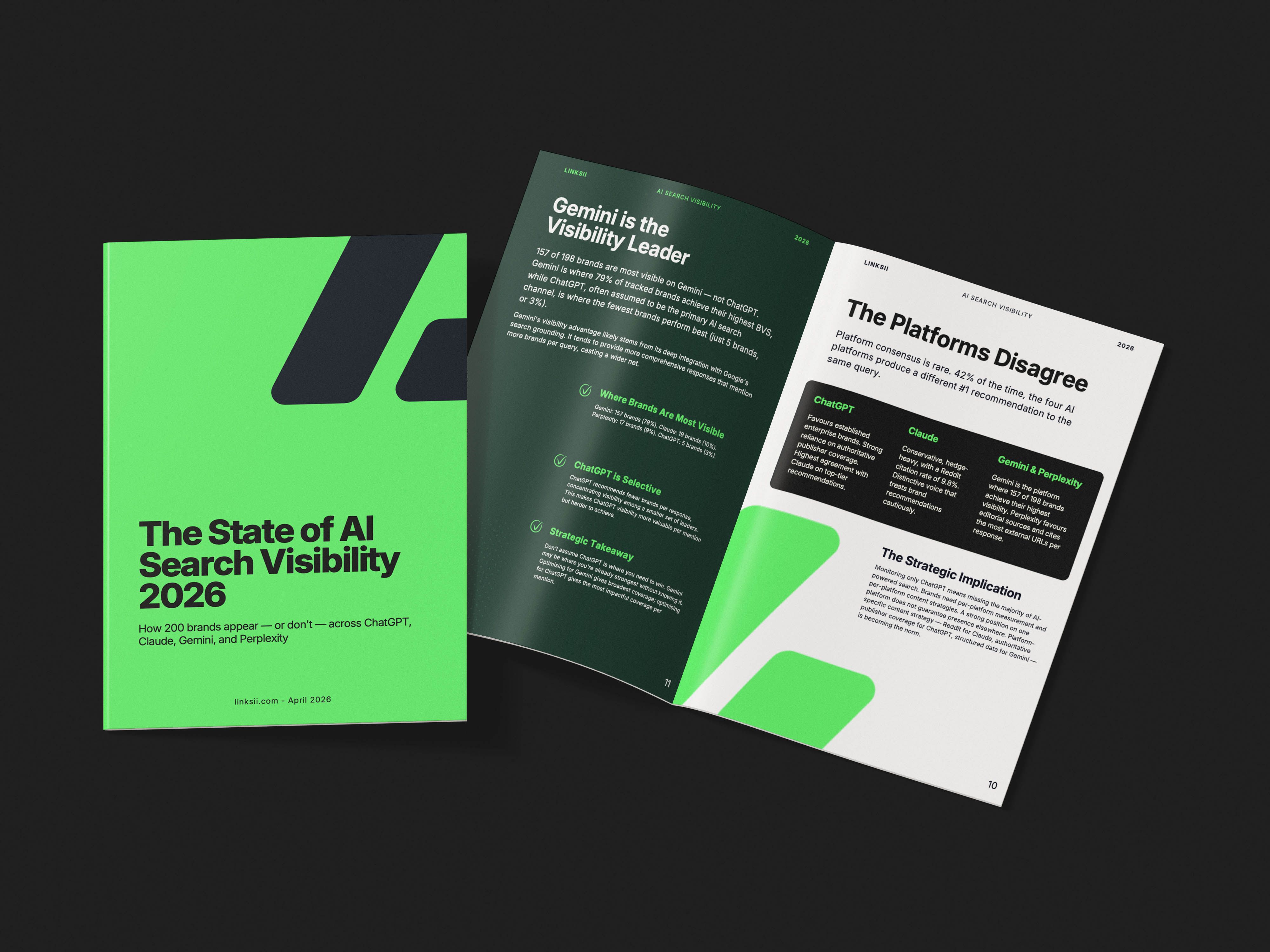
The research output was treated as a category-defining artefact in its own right. The State of AI Search Visibility 2026 (200 brands, 268 queries, 7,278 citations across four AI platforms) was conceived not just as a content asset but as the document that would do the educational work no marketing page could do alone. It was designed with the same craft as the product itself. Editorial typography, structural rigour, a clear narrative arc through ten findings. The report doesn't read as a content marketing piece. It reads as primary research.
The comparison and alternatives surface had to be aggressive. Linksii sits in a category where buyers will inevitably compare it against Profound, AthenaHQ, Peec.ai, Semrush, Ahrefs. Rather than hide from those comparisons, the studio designed a full comparison page system. One per competitor, surfacing real differences. That structure does double duty. It captures comparison-intent search traffic, and it signals confidence. A brand that's afraid of side-by-side comparisons doesn't build them into the site.
Selected work
Outcomes
What changed.
Linksii launched into a category that's still being defined. Within the first weeks of launch:
The deeper outcome is that the brand carries weight beyond its size. Linksii is small. The brand reads bigger. That gap is what category-creating brand work is supposed to do.
- The State of AI Search Visibility 2026 was downloaded across the SaaS, agency and marketing communities, and is now used as a primary reference document in industry conversations about AI search
- Comparison pages began ranking for direct competitor queries within the first weeks of indexing
- The free AI Visibility Checker generated qualified inbound from brands across multiple sectors
- Linksii is positioned as one of a small handful of named players in the AI search visibility category, alongside Profound, AthenaHQ, Peec.ai and Brandlight, having entered the conversation with no prior category footprint
Reflection
What this project means.
Linksii is the project where the studio's thinking about AI visibility stopped being a hypothesis and started being a measurement system. Building the platform meant building the data layer that informs every other piece of work the studio does.
It also taught the studio something about how to brand category-creating products. The temptation in this kind of work is to make the brand louder, to lean on personality, novelty, emotional appeal, because the category isn't doing the work for you. The lesson from Linksii was the opposite. In a category buyers don't yet understand, restraint and clarity build more trust than personality. The brand that sounds the most certain wins.
That principle now sits in the studio's approach to every project. Especially the ones where the buyer doesn't quite know what they need yet.
Got something similar in mind?
Let’s talk through it.
A free 30-minute call to size the work, share rough numbers, and see if we’re a fit.
Start a project